



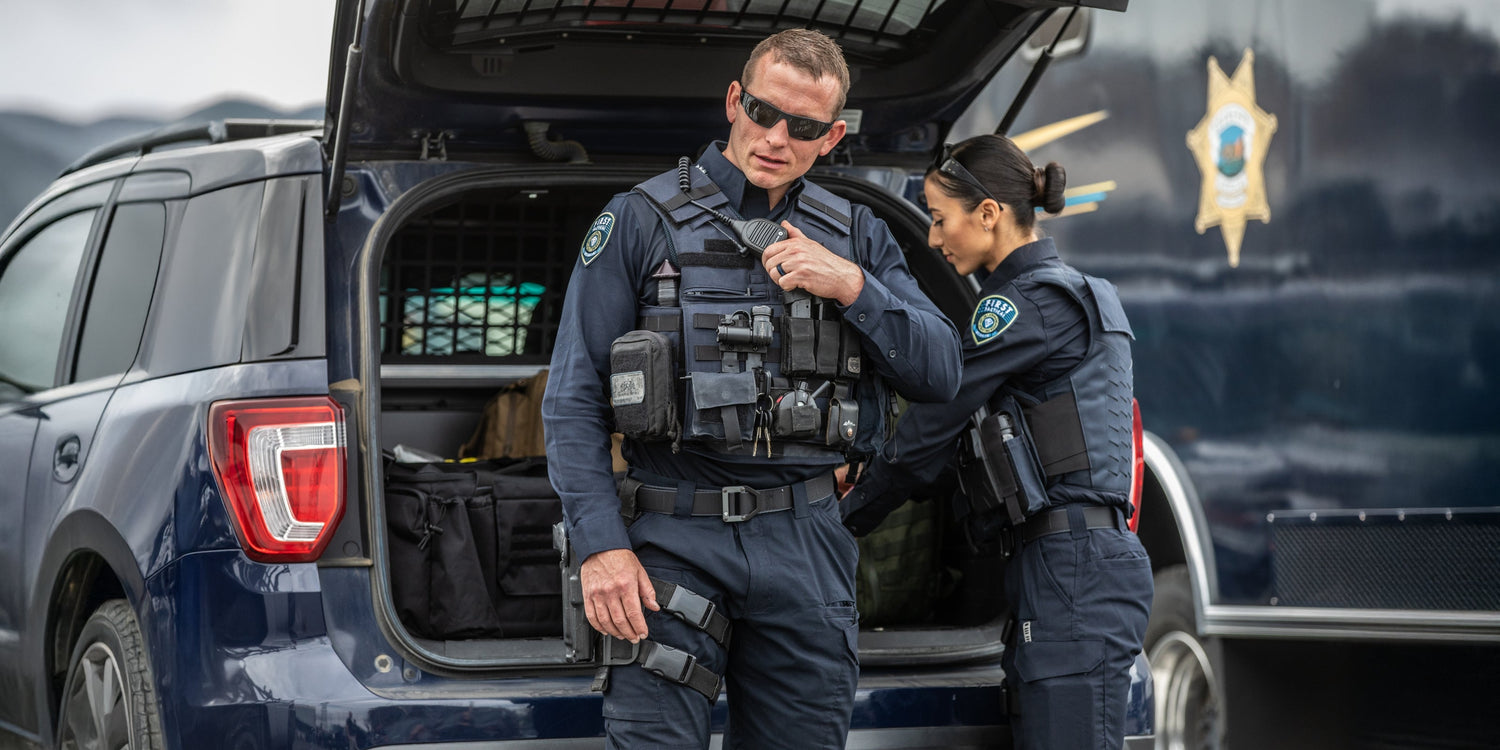
For first responders, efficient gear organization is not just a matter of convenience—it's a critical component of operational readiness. Tactical pouches provide a robust, adaptable solution for carrying essential equipment in the field. Designed to withstand harsh conditions and provide immediate access to necessary tools, these pouches are a vital part of any first responder's kit. This guide explores the different types of tactical pouches, their specialized functions, and how to select the right gear for your specific duty requirements, ensuring you're always prepared for the challenges you face.
Understanding tactical pouches
Tactical pouches are a fundamental part of professional field equipment, specifically designed to meet the rigorous demands of law enforcement, EMTs, and other first responders. Unlike standard civilian pouches, these specialized carriers are engineered to be durable while providing quick access to essential equipment. Tactical pouches evolved from decades of military innovation, where organized gear access can be the difference between mission success and failure.
The core design principles of tactical pouches emphasize durability, accessibility, and modularity. These pouches must function reliably in high-stress situations, from urban law enforcement operations to emergency medical responses. The materials and construction methods used in their manufacture reflect this demanding operational environment, incorporating reinforced stitching, weather-resistant fabrics, and secure closure systems that won't fail when lives depend on them.
MOLLE pouches (Modular Lightweight Load-carrying Equipment) are the current standard for tactical gear organization. This system uses a grid of webbing that allows users to attach and reconfigure pouches based on specific mission needs. The MOLLE system's versatility has made it the preferred choice across first responder and law enforcement agencies globally, enabling personnel to customize their loadouts for various operational scenarios.

What sets tactical pouches apart from civilian alternatives goes beyond mere durability. These pouches include specific design features like breakaway panels for emergency access, and standardized sizing that ensures compatibility across different equipment platforms. The importance of organized gear access cannot be overstated – in emergency situations, the ability to quickly locate and deploy essential equipment can save lives and ensure success.
Tactical pouches have also found applications beyond military and law enforcement. Security personnel, emergency medical technicians, and even outdoor enthusiasts use these pouches for their reliability and adaptability. The ability to customize a loadout for specific tasks makes tactical pouches a valuable asset in various professional and recreational settings.
Understanding the fundamental role and design of tactical pouches sets the stage for exploring the variety of specialized pouches available. Each type is tailored to specific needs, ensuring that first responders and law enforcement professionals can optimize their gear for any situation.
Types of tactical pouches and their specialized functions
The world of tactical gear pouches includes many specialized categories, each designed to address specific operational needs. Understanding these different types enables first responders and law enforcement professionals to build comprehensive gear systems tailored to their unique mission profiles.
Tactical belt pouches are the foundation of most professional loadouts, providing immediate access to essential equipment while maintaining a low profile. These pouches attach directly to duty belts or tactical belts, offering quick deployment of items like handcuffs, pepper spray, or backup magazines. The positioning on the belt ensures that critical gear remains accessible even when wearing body armor or other protective equipment.
 Tactical vest pouches expand carrying capacity by using the chest and torso area for equipment storage. These pouches typically mount to plate carriers or tactical vests using MOLLE attachment systems, allowing for customizable configurations based on specific needs. Vest-mounted pouches are excellent for carrying larger items or equipment that requires protection from environmental hazards.
MOLLE medical pouches are a specialized category designed specifically for emergency medical equipment. These pouches feature internal organization systems optimized for medical supplies, with elastic loops for securing bandages, tourniquets, and other life-saving equipment. The rapid-access design of medical pouches ensures that first responders can quickly deploy treatment supplies in critical situations.
Load distribution principles are crucial in pouch selection and placement. Proper weight distribution across the body prevents fatigue and maintains operational effectiveness during extended missions. Mission-specific pouch selection criteria must consider factors such as environmental conditions, threat levels, and the duration of operations to ensure optimal performance in the field.
While tactical belt pouches, vest pouches, and medical pouches cover many operational needs, administrative and utility pouches are essential for organizing the smaller, but equally important, tools and equipment that keep operations running smoothly.
Administrative and utility pouches: organizing essential tools and equipment
The tactical admin pouch serves as the command center for essential documentation, communication devices, and small tools that keep operations running smoothly. These pouches are a critical part of professional gear systems, providing organized storage for items that don't fit into specialized categories but are essential for mission success.
Essential admin items follow a specific hierarchy based on frequency of use and operational importance. Primary items include writing instruments, notepads, and identification materials that officers and first responders access regularly throughout their shifts. Secondary items include backup batteries, charging cables, and small tools that support primary equipment functionality. Tertiary items consist of reference materials, backup communication devices, and specialized tools used in specific situations.
Internal divider systems within tactical tool pouches, such as dedicated internal organizer pouches, maximize organization efficiency through strategic compartmentalization. Quality admin pouches feature elastic loops sized for standard pens and markers, dedicated slots for smartphones or radios, and secure pockets for sensitive documents. Some advanced designs incorporate clear windows for displaying identification or frequently referenced information, eliminating the need to remove items for verification.

Size considerations for tactical gear pouches must balance carrying capacity with operational mobility. Oversized admin pouches can interfere with movement or weapon deployment, while undersized pouches may not accommodate all necessary equipment. Professional users should evaluate their specific gear requirements and select pouches that provide adequate storage without compromising operational effectiveness or comfort during extended wear.
The layout of an admin pouch should also consider the user's dominant hand. Placing frequently used items on the side of the dominant hand can further enhance access speed and efficiency. This detail, while seemingly minor, can contribute to significant improvements in operational performance over time.
Beyond the organization of administrative essentials, specialized tactical pouches cater to specific equipment needs, enhancing protection and accessibility for mission-critical items such as first aid supplies and communication devices.
Specialized tactical pouches: first aid, communication, and utility applications
Specialized tactical pouches address the unique requirements of specific equipment categories, providing enhanced protection and accessibility for mission-critical items. These purpose-built carriers represent the evolution of tactical gear design, incorporating features tailored to the specific needs of medical equipment, communication devices, and utility items.
The tactical first aid pouch, commonly referred to as an Individual First Aid Kit (IFAK), exemplifies specialized design principles in action. These pouches must provide immediate access to life-saving medical supplies while protecting contents from environmental contamination. IFAK organization standards typically include dedicated spaces for tourniquets, hemostatic gauze, chest seals, and decompression needles, arranged for rapid deployment under stress.
Internal organization within medical pouches follows established trauma care protocols, positioning the most critical items for immediate access. Tourniquets occupy external mounting points for one-handed deployment, while pressure bandages and hemostatic agents reside in easily identified compartments. The color-coding system used in many professional medical pouches enables rapid identification of supplies even in low-light conditions.

Tactical phone pouches address the growing need to protect and access electronic devices in operational environments. These pouches incorporate shock-absorbing materials, water-resistant seals, and secure retention systems that prevent device loss during dynamic activities. Electronic device protection requirements include impact resistance, moisture protection, and electromagnetic interference shielding for sensitive communication equipment.
Communication pouches serve dual purposes by protecting expensive electronic equipment while ensuring rapid access for emergency communications. Features such as clear windows for touchscreen operation, cable management systems for hands-free devices, and quick-release mechanisms enable seamless integration with operational procedures. The protection of sensitive communication equipment extends beyond physical damage to include security considerations for encrypted devices and classified information.
Tactical water bottle pouches and tactical flashlight pouches represent utility applications that support sustained operations. Hydration system integration has evolved to include insulated pouches that maintain water temperature, retention systems that secure bottles during movement, and quick-access designs that enable one-handed operation. Flashlight pouches incorporate features such as lens protection, battery compartment access, and mounting systems that allow for hands-free illumination.
Some specialized pouches also include features like integrated knife sheaths or multi-tool pockets, further enhancing their utility in the field. These multi-functional designs can help reduce the overall number of pouches required, streamlining the user's loadout and improving mobility.
When selecting tactical pouches, the method of attachment is a critical consideration. Tactical belt pouches, in particular, offer two primary attachment systems: MOLLE and direct belt-mounted solutions, each with distinct advantages.
Tactical belt pouches and attachment systems: MOLLE vs. belt-mounted solutions
Tactical belt pouches are the most accessible tier of equipment storage, providing immediate access to essential items without requiring complex manipulation of larger gear systems. The choice between MOLLE pouches and direct belt-mounted solutions significantly impacts operational effectiveness and user preference.
MOLLE webbing standards ensure compatibility across different manufacturers and equipment platforms, creating a universal system for tactical gear attachment. The standardized spacing and dimensions of MOLLE webbing allow users to interchange pouches between different carriers, belts, and platforms without compatibility concerns. This modularity is invaluable for agencies that use equipment from multiple manufacturers or need to adapt configurations for different mission profiles.
The advantages of MOLLE systems extend beyond simple compatibility to include enhanced load distribution and positioning flexibility. MOLLE attachments distribute weight across multiple attachment points, reducing stress on individual mounting locations and improving overall system durability. Users can position pouches at optimal locations based on their specific needs, body dimensions, and operational requirements.
Belt-mounted solutions offer distinct advantages in terms of simplicity and profile management. Direct belt attachment eliminates the bulk associated with MOLLE webbing while providing secure retention for essential equipment. This streamlined approach appeals to plainclothes officers, concealed carry practitioners, and personnel who prioritize minimal profile over maximum modularity.
Belt width considerations are crucial in compatibility and security. Tactical pouches designed for 2.25-inch duty belts may not fit securely on standard 1.5-inch dress belts, potentially compromising retention and accessibility. Professional users must ensure that their pouches match their belt specifications to maintain secure attachment and prevent equipment loss during dynamic activities.
Load distribution across platforms requires careful consideration of weight placement and accessibility priorities. Concentrating too much weight on one side of the belt can cause discomfort and affect mobility, while poor positioning can interfere with weapon access or other essential functions. Experienced professionals develop personalized configurations that balance weight distribution with operational requirements.
Some users combine MOLLE and belt-mounted solutions to optimize their loadout. For example, a user might choose to mount a holster directly to the belt for maximum stability while using MOLLE pouches for other accessories to allow for adjustability.
Regardless of the attachment system, the materials and construction of tactical pouches are paramount in ensuring durability and reliability in demanding environments.
Materials and construction: durability standards for tactical environments
The demanding nature of tactical operations requires tactical pouches constructed from materials and techniques that exceed civilian standards. Understanding these durability requirements enables professionals to select equipment that will perform reliably throughout extended service life under harsh conditions.
Cordura fabric specifications are the gold standard for tactical applications, with 500-denier and 1000-denier variants offering different balances between weight and durability. The 500D Cordura provides an excellent durability-to-weight ratio for general applications, while 1000D Cordura offers maximum abrasion resistance for heavy-duty use. These nylon-based fabrics incorporate special weaving techniques that enhance tear resistance and dimensional stability under load.
Reinforcement techniques used in quality tactical pouches include bar-tacking at stress points, double-stitching along load-bearing seams, and edge binding to prevent fraying. These construction details significantly extend service life by addressing the most common failure points in tactical gear. Professional-grade pouches use heavy-duty bonded thread that resists degradation from UV exposure, moisture, and chemical contamination.
Weather resistance standards for tactical environments encompass both water repellency and moisture management. Durable Water Repellent (DWR) coatings applied to fabric surfaces cause water to bead and roll off rather than soaking into the material. However, these coatings require periodic renewal to maintain effectiveness, making fabric selection and construction quality crucial for long-term performance.
Abrasion testing criteria evaluate a fabric's ability to withstand surface wear from contact with rough surfaces, equipment edges, and repeated handling. Quality tactical fabrics undergo standardized testing procedures that simulate years of field use, ensuring that pouches maintain their integrity and appearance throughout their service life. This testing is particularly important for pouches that experience frequent attachment and detachment cycles.
Beyond the fabric itself, the quality of zippers, buckles, and other hardware components also contributes significantly to the overall durability of a tactical pouch. Look for pouches that use reputable brands of hardware known for their reliability and resistance to breakage.
Advanced tactical pouch configurations and expert optimization tips
Professional optimization of tactical pouches extends beyond basic selection to encompass advanced configuration strategies that maximize operational effectiveness while minimizing bulk and complexity. These techniques represent the accumulated wisdom of experienced operators who have refined their gear systems through extensive field use.
Load distribution strategies focus on balancing weight across the body to maintain mobility and reduce fatigue during extended operations. Experienced professionals position heavy items close to the body's center of gravity while distributing weight evenly between front and back mounting points. This approach prevents the gear system from shifting during movement and reduces strain on individual attachment points.
Accessibility prioritization involves arranging equipment based on the speed and frequency of access required during operations. Items needed for immediate threat response occupy the most accessible positions, typically on the strong-side belt or chest area. Equipment used for sustained operations can be positioned in less accessible but more secure locations, such as the back panel of a plate carrier or weak-side belt positions.
Common configuration mistakes include overloading individual pouches beyond their design capacity, creating interference between adjacent pouches, and failing to secure loose straps or attachment hardware. These errors can compromise equipment accessibility, create noise during movement, or result in equipment loss during dynamic activities. Regular configuration reviews help identify and correct these issues before they impact operational performance.
Maintenance schedules for combat pouches and specialized equipment should include regular inspection of attachment hardware, cleaning of fabric surfaces, and replacement of worn components. Professional users often maintain detailed logs of equipment usage and condition to predict replacement needs and prevent field failures. This proactive approach ensures that gear systems remain reliable throughout their service life.
Field testing methodologies involve conducting realistic training scenarios that stress-test gear configurations under operational conditions. These exercises reveal weaknesses in equipment selection, positioning, or attachment methods that might not be apparent during static evaluation. Successful professionals continuously refine their configurations based on lessons learned from training and actual operations, creating highly optimized systems tailored to their specific requirements and preferences.
Another optimization tip is to use dummy weights during training to simulate the actual weight of a fully loaded pouch. This allows users to get a realistic feel for how the gear will perform in the field and make adjustments as needed.
Optimizing Tactical Pouch Use for Peak Performance
Selecting and configuring tactical pouches effectively is crucial for law enforcement, EMTs, and first responders. By understanding the different types of pouches, attachment systems, and materials, professionals can create a gear system that enhances their operational readiness. Regular maintenance, strategic load distribution, and realistic field testing further refine these systems, ensuring they meet the demands of any situation. The ability to quickly access and deploy essential equipment can save lives and ensure mission success, making tactical pouches an indispensable part of any first responder's toolkit. As a next step, consider evaluating your current pouch setup against the principles outlined in this guide to identify areas for improvement and ensure you are fully prepared for your next operation.